Auto repair customers are usually stressed before they ever contact you. Their car is making a noise, they need to get to work, they are worried about the bill, and they do not want to get talked into repairs they do not understand.
That means trust starts before the first phone call. On the U.S. West Coast, drivers compare shops on Google, scan reviews, look for photos, check whether you handle their issue, and decide who feels clear enough to call. If your online presence is thin, vague, or outdated, you are leaving that trust gap for a competitor to fill.
The Repair Shop Trust Stack
- Show what you fix: brakes, diagnostics, oil changes, AC, suspension, alignments, tires, check engine lights, hybrids, fleets, or imports.
- Prove the shop is real: exterior photos, bays, tools, technicians, waiting area, certifications, warranties, and actual customer vehicles.
- Make the next step easy: click-to-call, mobile quote request, photo upload, appointment request, and a clear "what happens next" message.
- Follow up after service with a review request, maintenance reminder, and a simple way to come back before the next emergency.
Stop Making Customers Guess What You Do
Many repair shop websites say "full service auto repair" and stop there. That phrase feels normal to shop owners, but customers search for specific problems: "brake repair near me," "check engine light Long Beach," "AC not blowing cold," or "Toyota mechanic near me."
Create short service sections for the jobs you actually want. Each one should explain the symptom, the service, and what the customer should do next. Clear beats clever.
Use Photos To Lower Anxiety
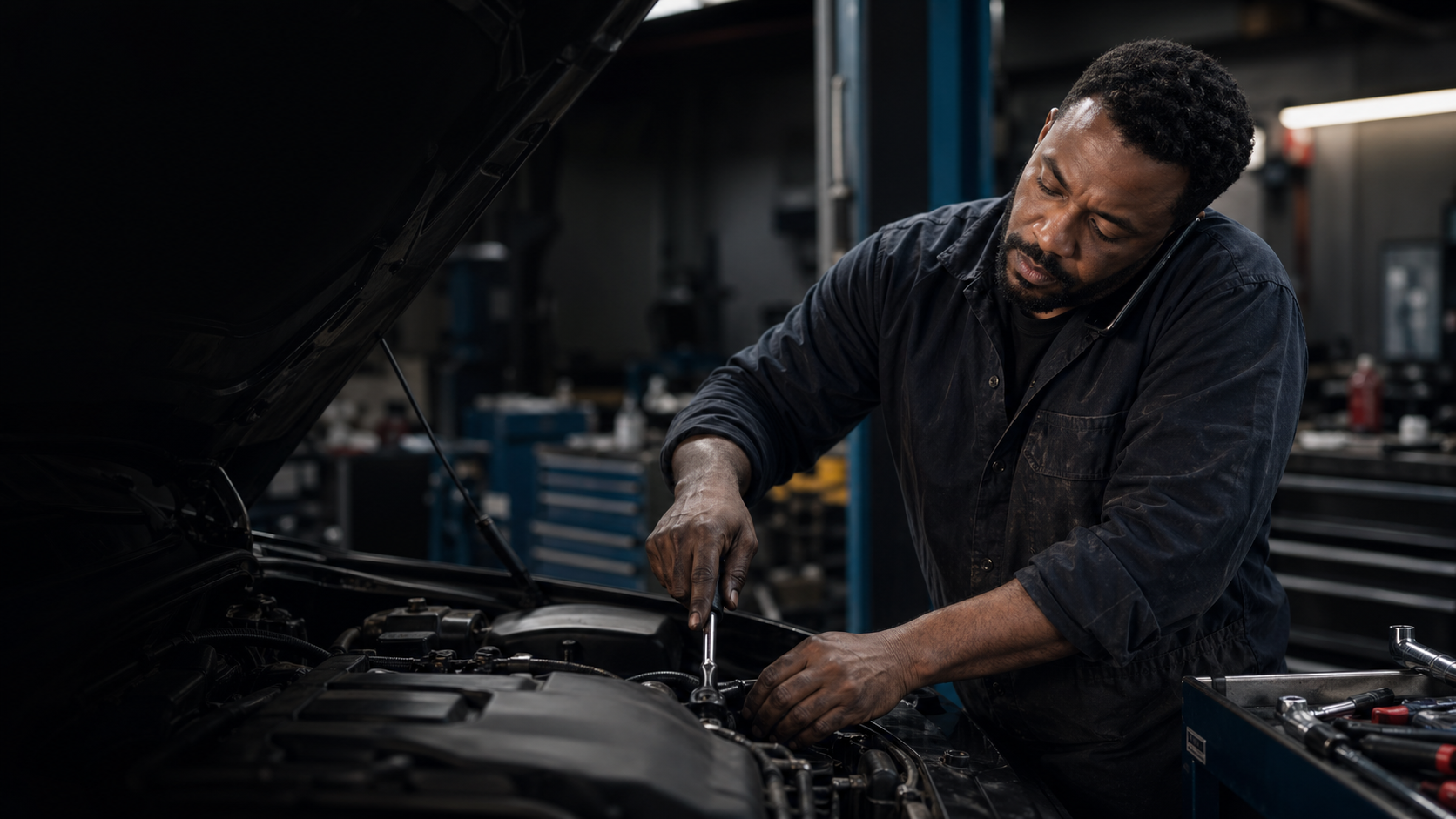
Drivers want to know where they are sending their vehicle. Real photos help them feel the shop is established, organized, and human. Add current photos to your website and Google Business Profile: the front of the shop, the service counter, technicians working, diagnostic tools, finished repairs, and clean shots of your bays.
Do not rely only on stock images. A slightly imperfect real photo usually builds more trust than a polished generic image that could belong to any shop in America.
Owner-Friendly Checklist
- Your Google Business Profile lists accurate hours, phone number, service categories, and appointment link.
- Your website names the top 8 to 12 repair services you want more of.
- Your homepage answers: where you are, what you fix, who you help, and how to book.
- Your latest reviews are visible and you respond to both positive and negative reviews professionally.
- Your contact form lets customers describe the issue, upload a photo, and choose call or text follow-up.
- Your site mentions warranties, certifications, financing, shuttle options, or pickup/drop-off if you offer them.
- Your missed-call follow-up texts customers back quickly when the front desk is busy.
A 30-Minute Friday Tune-Up
Every Friday, pick one common repair from the week and turn it into trust-building content. Add one photo to Google, write one short explanation for customers, answer one common question, and send review requests to customers who had a smooth visit.
That simple habit keeps your shop active online and teaches future customers that you explain repairs clearly before they hand over the keys.
NotebookLM / podcast companion prompt
Turn this article into a 7 minute owner-friendly podcast for small auto repair shop owners on the U.S. West Coast. Explain how Google reviews, service clarity, real shop photos, mobile quote requests, missed-call text back, and post-service review follow-up help drivers trust a repair shop before calling. Use practical examples for brakes, check engine lights, AC repair, diagnostics, tires, alignments, and fleet maintenance. End with a 30-minute Friday tune-up checklist the owner can complete without hiring a marketer.